No products in the cart.
Train bomb in Balochistan State: Why violence is on the rise

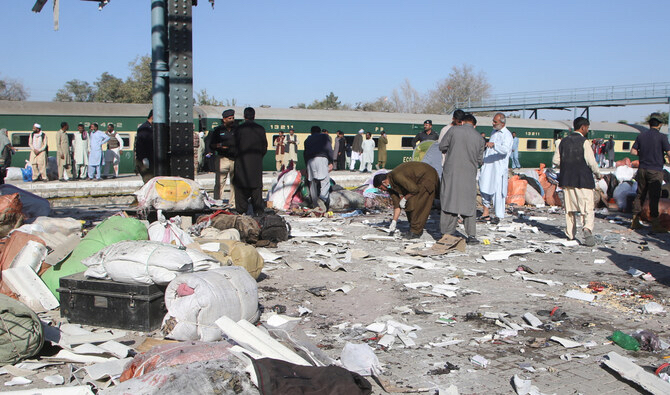
A deadly bombing targeting a train in the state of Balochistan has renewed attention on the worsening insurgency in the region. The attack near Quetta killed more than 30 people, according to officials, and was claimed by the separatist militant group Baloch Liberation Army.
What happened?
The bombing struck a shuttle train carrying Pakistani security personnel and their families as they travelled toward the Jaffar Express ahead of Eid holidays. Officials said an explosives-laden vehicle rammed into the train, derailing several coaches and causing extensive casualties.
The attack is one of the deadliest in recent months and follows a pattern of escalating assaults on trains, security forces and infrastructure in Balochistan. Earlier attacks included the 2025 hijacking of the Jaffar Express, where militants took hundreds hostage.
Why is violence increasing?
1. Long-running separatist insurgency
Balochistan has faced separatist unrest for decades. Armed groups such as the Baloch Liberation Army accuse the Pakistani state of exploiting the region’s gas, minerals and strategic location while leaving local communities impoverished and politically marginalised.
The region is resource-rich but remains one of the least developed areas under Pakistani control. Militants say wealth from natural gas, copper and port projects benefits Islamabad and foreign investors more than ethnic Baloch residents.
2. Chinese-backed infrastructure projects
Violence has intensified around projects linked to the China-Pakistan Economic Corridor, especially the deep-sea port at Gwadar. Separatist groups view these developments as symbols of outside control over local resources.
Militants increasingly target:
- railway infrastructure
- military convoys
- Chinese interests
- non-local workers
- state institutions
3. Shift toward more sophisticated attacks
Analysts say insurgent tactics have evolved dramatically. The BLA has moved from hit-and-run ambushes to coordinated assaults, suicide bombings and hostage-taking operations.
Recent attacks show:
- greater operational planning
- simultaneous multi-site assaults
- urban terrorism tactics
- use of suicide bombers
Security experts describe the 2025 train hijacking as a “watershed moment” in the insurgency because it demonstrated the militants’ ability to seize major transport infrastructure and sustain prolonged confrontations with the military.
4. Regional instability
Balochistan borders both Afghanistan and Iran, making it strategically sensitive. Pakistan has repeatedly alleged that hostile foreign actors support separatist militants, though evidence is often disputed internationally.
The region also suffers from:
- weak governance
- tribal rivalries
- cross-border smuggling networks
- heavy militarisation
- distrust between locals and the state
Pakistan’s response
The Pakistani military has launched large-scale counterinsurgency operations across Balochistan. Officials say hundreds of militants have been killed in recent campaigns.
However, critics argue that a security-only approach has failed to address deeper political and economic grievances. Human rights groups and analysts have long raised concerns about enforced disappearances, crackdowns on activists and limited political autonomy in the region. These issues continue to fuel resentment among many Baloch communities.
Why the train attack matters
The latest bombing signals that militants remain capable of striking heavily guarded targets despite intensified military operations. It also highlights the symbolic importance of railways in regional security and trade.
Attacks on trains create:
- national psychological impact
- economic disruption
- pressure on the government
- international concern over regional stability
The incident is likely to deepen fears that the insurgency is entering a more violent and organised phase.
People define “terrorism” very differently depending on politics, history, and personal experience. Governments often define armed groups as terrorist organizations when they use violence, bombings, kidnappings, or attacks against state targets or civilians. Supporters of those same groups may instead describe them as liberation movements, resistance fighters, or freedom movements struggling for self-determination.
In the case of the Baloch Liberation Army (BLA), many Baloch nationalists see the organization as part of a broader struggle for Baloch identity, rights, and independence. Supporters often argue that:
- Balochistan has faced political and economic marginalization
- natural resources have benefited outsiders more than local communities
- military operations and enforced disappearances have created deep anger
- armed resistance emerged from decades of unresolved grievances
While there is significant nationalist sentiment among many Baloch communities, opinions differ across regions, tribes, political groups, generations, and individuals. Some support independence, some support greater autonomy, some oppose armed struggle, and others support remaining within Pakistan.
Many independence and liberation movements throughout history have argued that they are fighting for their people’s identity, land, language, political rights, and self-determination. Supporters of the Baloch cause often frame the struggle in those terms — as a movement for freedom, dignity, and national rights for the Baloch people.
International reactions, however, are usually shaped not only by political goals but also by methods used during conflict. Governments tend to support movements they see as aligned with their strategic interests and international law, while condemning attacks that involve civilians or armed violence. That is why different actors can describe the same movement very differently.
Baloch nationalists and supporters view the group as resistance fighters defending Baloch rights, identity, and control over natural resources in Balochistan. They point to issues such as enforced disappearances, political marginalization, military operations, and economic grievances as reasons behind the insurgency.
Others — who are the Pakistani government and several countries such as the United States and United Kingdom — classify the BLA as a terrorist organization because of attacks involving civilians, bombings, suicide attacks, and assaults on public infrastructure.
The Baloch Liberation Army (BLA) is a separatist armed group operating in Balochistan. The organization says it is fighting for the independence of Balochistan and greater control over the region’s natural resources.
Background
The group emerged in the early 2000s during renewed unrest in Balochistan. It accuses the Pakistani state of:
- exploiting Balochistan’s gas, minerals, and coastline
- marginalizing ethnic Baloch communities
- using military force against local populations
Pakistan, along with several countries including the United Kingdom and United States, has designated the BLA as a terrorist organization because of attacks on civilians, security forces, and infrastructure.
Main targets
The BLA has carried out attacks against:
- Pakistani military and police
- railway infrastructure
- Chinese projects linked to the China-Pakistan Economic Corridor (CPEC)
- non-local workers
- government installations
In recent years, the group has expanded from guerrilla-style attacks to:
- suicide bombings
- coordinated assaults
- hostage operations
- attacks in urban areas
Key incidents
Major attacks linked to the BLA include:
- attacks on Gwadar Port projects
- assaults on military bases in Balochistan
- the hijacking of the Jaffar Express in 2025
- the 2026 train bombing near Quetta
Leadership and structure
The BLA is believed to operate through small armed cells spread across mountainous areas of Balochistan. Pakistani authorities say some fighters use border regions near Afghanistan and Iran for movement and shelter, though these claims are disputed.
One of its known factions is the “Majeed Brigade,” which specializes in suicide attacks.
Why it matters
The BLA has become one of the most active insurgent groups in the region. Its attacks have increased security concerns around:
- transport networks
- energy projects
- Chinese investments
- regional stability
The conflict has also drawn international attention because Balochistan is strategically located Makuran sea and the Arabian Sea and major trade routes.

Please login to join discussion
easyComment URL is not set. Please set it in Theme Options > Post Page > Post: Comments
Related Posts
Harsh words against the monarchy in Maulana Abdul Hamid’s Friday sermon (18 Ordibehesht 1405)
Harsh words against the monarchy in Maulana Abdul Hamid's Friday sermon (18 Ordibehesht 1405)